

My Two Dads
Growing up between a father and stepfather who hated each other and whose influences live on inside me

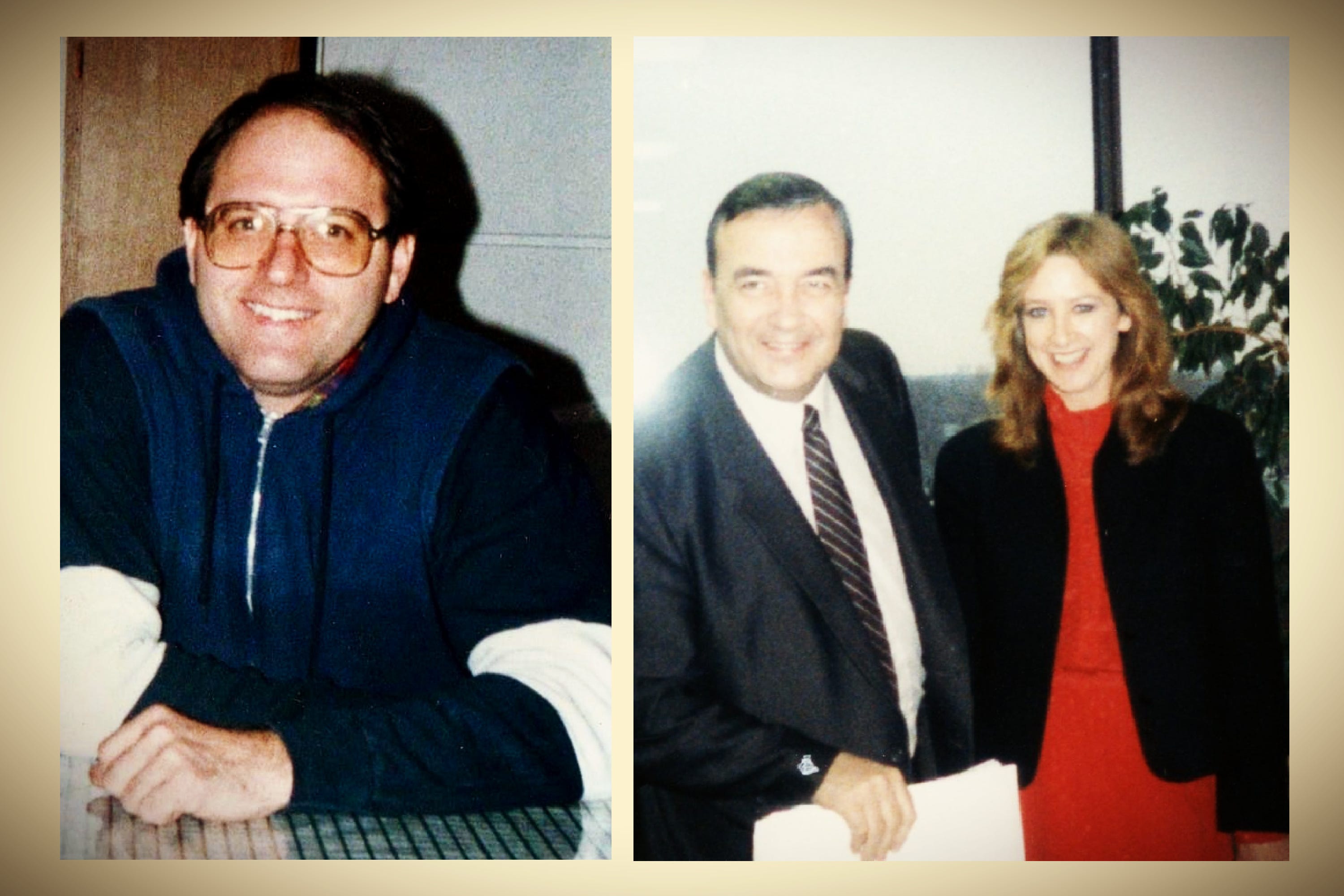
For the second half of my childhood, I had two dads.
My dad Mike (left)
And my stepdad Gene (right, with my mom).
They were never in the same place at the same time. Not even at a school event. When Dad came to pick my brothers and me up for weekend visits, he’d wait outside, honking from his car.
Seeing them side by side in the photos above would’ve made my breath stop not that long ago. I started this post last year and needed time to let that sit.
Gene died shortly before turning 58. Dad died shortly after turning 60. Maybe because my memories of them are frozen in their fifties, the decade I’m in now, is also why I’m noticing more of the influences they’ve had on me and why I’m wanting to finally feel at peace with holding them together.
I’ve written about the strangeness of being in the middle of my mom and her mother-in-law. It was also weird growing up in the middle of a dad and stepdad who hated each other and were so different, yet both influenced me. Genetics getting passed down are obvious. But so are other influences. My husband was adopted by his dad as a baby and very much became Berryhill. The parents who raise us also become part of us even if not by blood.
Eventually, making peace with my dads’ influences living within felt necessary but not necessarily something that would just happen. Writing has helped a lot. Here I write about my two dads and hope it might help someone on their own journey finding peace with the parents they hold within.
Two Very Different Dads
Dad and Gene were total opposites: big city vs small town, Republican vs Democrat, Oscar vs Felix, spender vs scrimper. Their backstories were different too.
Dad grew up in a Wisconsin rural cousin-town where his Bavarian family had lived for generations. His childhood was shaped by his parents’ contentious relationship. He went to college nearby at UW-Madison and was a 1970 history and poly sci grad. Dad was JCPenney’s man for nearly four decades, retiring as a store manager. He traveled for fishing and Big Ten college sports and had an obsessive level of love for the Badgers. Dad always preferred being a big fish in a small pond.
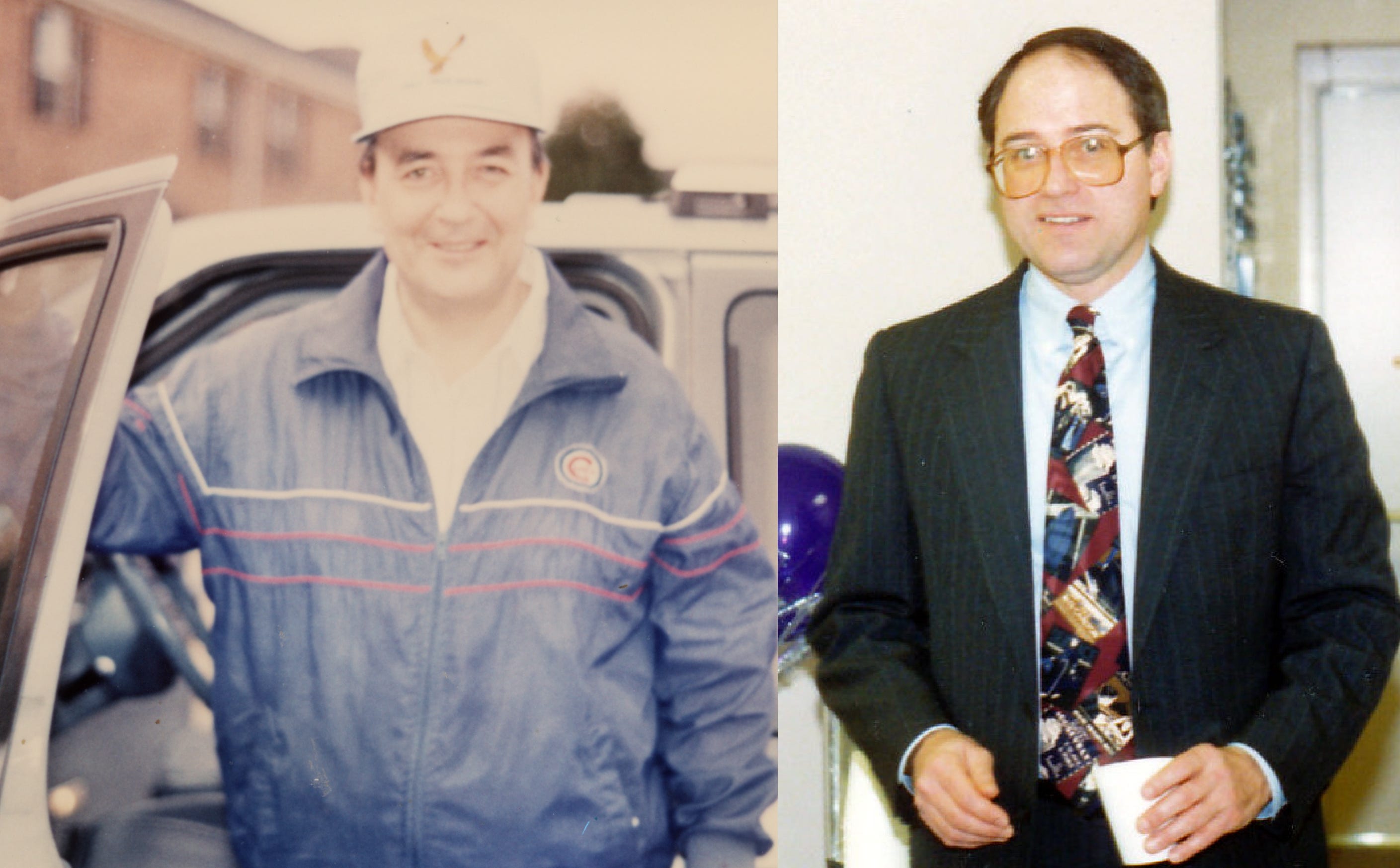
Gene was savvy, metropolitan, and streetwise, growing up proudly Irish on the South Side of Chicago in a fairly stable family. He learned French and majored in communication at DePaul in the 1950s after serving overseas in France. He loved being out on the town and traveling everywhere life took him, always staying loyal to the Chicago Cubs. After years spent running a Chicago club called the Bramble Bush he worked in sales and recruiting.
Neither of my parents liked Nixon, but by 1976, Mom and Dad were on opposite political sides. Like Mom, Gene was Reagan/Bush while Dad was a Mondale man. Dad liked rules and regulations and checking boxes—a bit of a technocratic ideologue, I’d say. Gene was more of a realist, drawn to risk taking, entrepreneurship, and growing circles.
Dad and Gene had some similarities: they were both extroverted talkers with loud, distinctive voices and a zest for life. They were both cradle Catholics. They both loved Mom. And they both relied on her.
In both cases, Mom did the “woman’s work” and often the “man’s” because neither of them had any affinity or ability for handyman work. Mom grew up on a farm and knew how to figure things out. Dad and Gene both had a bit of fancy pants in them. Mom was the one who wore the shit-kicking boots and the one with the magical touch. Whether it was Darrin One or Darrin Two, Samantha saved the day, without even a twitch of her nose.
In college, when I learned about Myers-Briggs personality tests (our school used the results to group students, mostly to make sure we were around personalities different from our own), I realized how their differences synced with Gene as a P (laid back) and Dad the J (orderly) archetypes that storylines love to play up, like The Odd Couple.
Dad was the Felix (structured and on time), but more of a high-testosterone version. He was a loyal employee, a company man, showing up every day without fail. He worked for 38 years at JCPenney and could literally name the dates and reasons for the only 2.5 sick days he took during his entire career. Dad always looked neat as a pin, like he woke up that way. I never remember him without his cologne, which smelled just like walking past an Abercrombie & Fitch in the nineties.
Gene was the Oscar (carefree and relaxed), but more of a polished version. He had an entrepreneurial, scrappy spirit that took him in all directions, wearing a cologne that smelled like older man English Leather. Like mom, he was a risk-taker but also a rescuer with a big heart, showing up to help anyone during times of crisis, a place he knew too well, again and again. At home, Gene wore his bright red velvet robe into the afternoon, cooking up huge messes in the kitchen. He slept in, loved to shop, and liked sweaters.
Gene’s splurges were everyday and unplanned. Dad’s splurges were timed and recorded just like every aspect of his life and if you came with he’d tell what to do. He documented everything and might’ve enjoyed the receipt of a splurge even more than the splurge itself. Gene knew how to be in the moment and soak it all in.
Headhunter and Divorced Dad
I was nine when I met Gene. He worked with Mom at a “headhunting” agency called Liberty Associates. It was above a bank and attached to the Des Plaines Mall. Gene lived alone nearby in a rented condo that I never went to visit. I don’t why.
They were recruiters working 100% commission, hunting for candidates to fill IT jobs in the mainframe days. Gene had been a traveling salesman so the shift into recruiting wasn’t a far stretch. For mom, it was a new career. Her doctor told her she couldn’t do key punching anymore. All those degenerative disc problems can show up a lot earlier with repetitive strain. At 33, she’d already spent nearly half her life in that line of work.
Recruiting offered Mom a chance to build a career that used her communication, counseling, and problem-solving skills with a potential for much better pay, income she needed during and after the divorce. She worked that chance doggedly, day after day, until she was 70.
Gene encouraged Mom and believed in her, never feeling threatened by a woman’s success. He was a romantic in romcom way, always trying, always failing. He knew his shortcomings though. Knowing doesn’t fix everything. Neither does trying. But they do mean something.
Having one person believe in you can make a world of difference. Gene was that person for her in a way Dad was too insecure and self-focused to be. Mom and Gene showed me a partnership example of a couple, with Mom in the driver’s seat and Gene often being in no state to drive.
Wedged in the front middle seat between Mom and Gene, I could feel their love energy—sweet and a little nauseating, but still better than being in the back between my brothers
The spiteful energy between Dad and Gene was also impossible to ignore.
Dad saw Gene as an old drunk guy with a mafia mixed-up past who must somehow be rich. He could never understand how a man offering emotional security could be far more attractive than financial security. Gene may have been “rich” in his younger club-owning days, but rich he was very much not. Mom was the new breadwinner.
Gene saw Dad as a forlorn man still in love, stubbornly unwilling to see that his own assholery drove Mom away. And he also saw him as a fighting man, unable to see he’s already lost. Both were pretty much true.
Anger was Dad’s problem.
Alcohol was Gene’s.
Neither had easy fixes.
At the time, Dad’s anger issues felt more like character flaws than Gene’s addiction, so I had less empathy for his problem.
“Alcoholism is a disease,” I learned watching Oprah. Anger felt more personal, like someone doing something to you instead of to themselves. Now I see how Dad’s anger issues were just as harmful to himself and also explainable by something more. Without trying to armchair diagnose, it was obvious Dad had some glitch in his brain coupled with deep fear. As an outsider, my husband noticed it right away when he met Dad in 1993, and I grew more understanding. Like addiction, he couldn’t just stop.1
Either way, whether it was a binge or a blowup, both dads made life less predictable. But unlike roller coasters that I loved, I couldn’t look up and see the ride. I couldn’t opt out of climbing on board and the ride had no end. I was strapped in and stuck in our shared destinies.
Choosing sides isn’t optional when your parents are warring. Wars are like that. For me, the only side was Mom’s side. But no matter which side I chose, I was still in the middle. When Gene entered the picture, the sides grew more complicated.
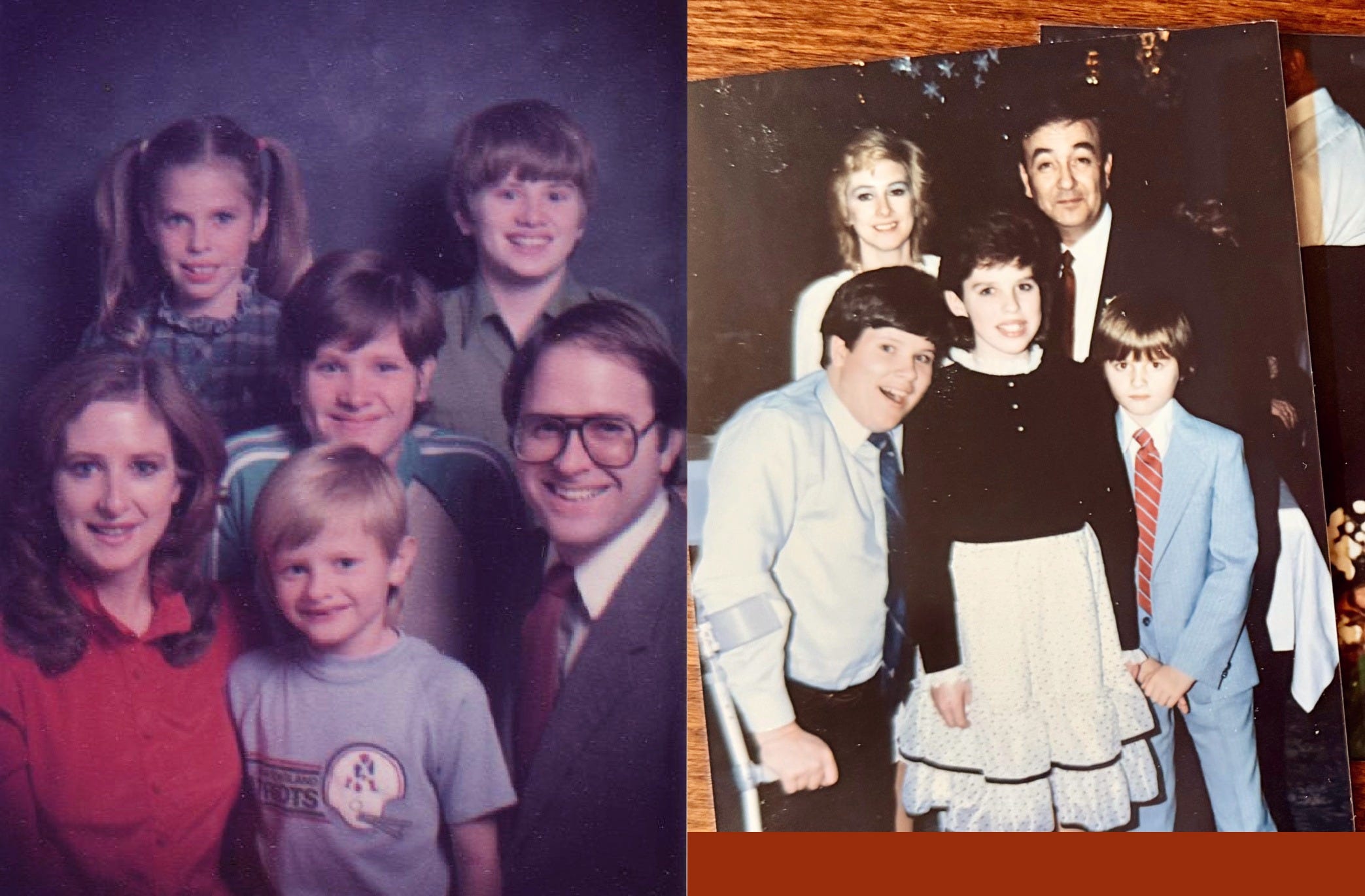
New home, new family
When I was eleven, a year after the divorce was finalized, Mom married Gene. It was midway through sixth grade on a school night just days before Christmas. New house, new school, and new family to follow. We moved out of the townhome and into a split level just a few miles away on the other side of Des Plaines. It literally felt like a whole new world.
I wrote about that here:

Being an older kid, I didn’t want another dad. I didn’t even think I needed one. Gene was Mom’s boyfriend, now husband, and I was part of the package along with my brothers. No matter how much adults tell you that’s not true, you know on some level it is because it just is.
Dad or not, other people saw Gene as a dad to me, and over time he became one.
But everything felt different, including our homes.
Perry Mason and Cool Hand Luke
Gene was 16 years older than mom compared to a two-year age gap with Dad. But Mom often seemed closer to Gene’s age maturity-wise. She never grew up with expectations or parents to rebel against and seemed more aligned with older generations than boomers like Dad. There’s a difference between being hungry and being hungry for more.
Gene was the “oops” baby born during the Great Depression and he had baby-of-the-family traits. He had an entertainer’s voice like Jackie Gleason or Harry Caray with a look of a Perry Mason, mirroring the aesthetics of adults he came of age seeing and hearing.
Dad was the oldest sibling with a stereotypical type-A personality to match. His favorite coming of age movie was Cool Hand Luke2, with Paul Newman playing an irreverent yet righteous boomer archetype, a kind of Catholic hero, rebel, martyr all at once. When Dad tried out the role in real life, it often landed strangely or was even off-putting—subtleties he rarely noticed.
What struck me most after watching the movie now is how the Paul Newman character seemed more like Gene than Dad. The idea that Dad secretly wanted to be more like a Gene-type sat with me. I’m also pretty sure Gene would’ve liked to have settled down with a wife and family earlier on, like Dad did, and maybe would have if his first wife didn’t die so young from cancer. Gene really loved being a dad and having a family. Dad did too, and he never got over losing his. I don’t even know now if the hate they seemed to have for each other was entirely real. It felt real, yes, but was it?
Mom and Gene were kind of kindred spirits. Mom and Dad were complete opposites. We often fall in love with the people we wish we were.
Mom was the cool, fearless one, willing to take risks with her own kind of “keep going” defiance. So was my racecar–driver brother Patrick. Dad kept Patrick on his “side” after the divorce, treating him more like a brother than a son, and not treating him well like he did to Mom.
At heart, Dad was a nerd who would’ve made an awesome history teacher and probably would have enjoyed life more and felt more at ease (and would’ve been easier to live with) than in his life as the retail man. He’d fallen into that career by chance and stayed, because the idea of choosing a new path felt almost sacrilegious to him. He told me that when I was 33 and thinking about leaving pharmacy. You’re better off sticking with one thing and just getting better at it, he said. What we’ve got here is a failure to imagine, I thought at the time.3 I couldn’t imagine living a “time to make the donuts” life with no hope of something new.
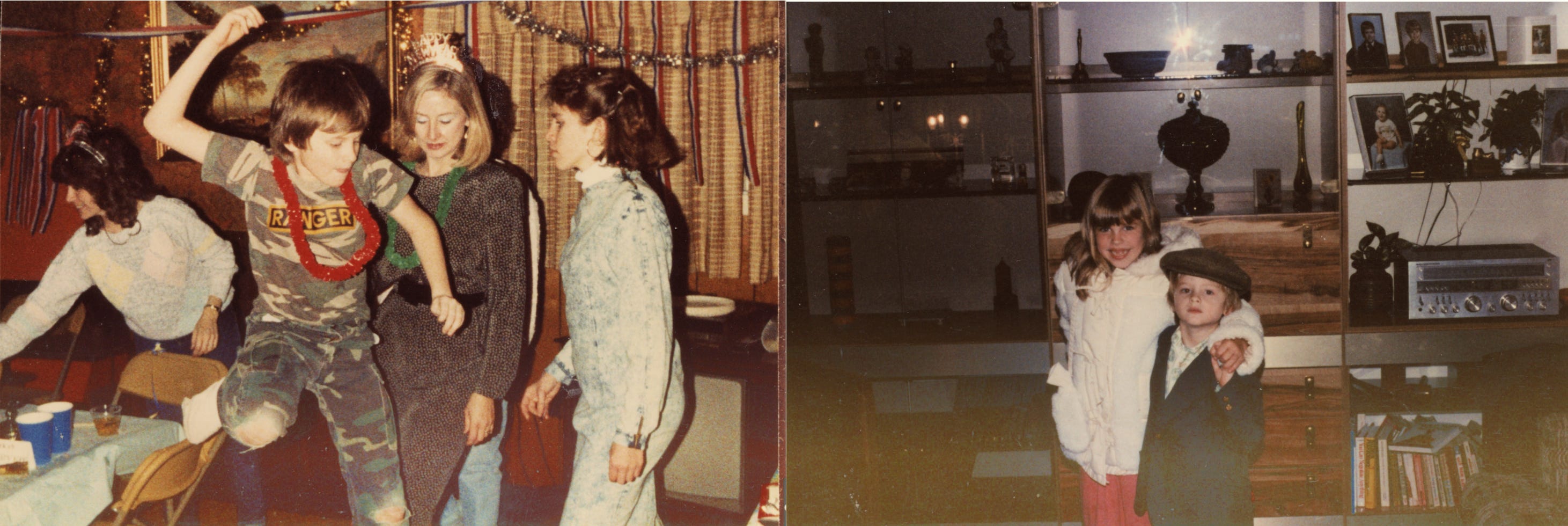
Dad moved out in late ‘84 taking his stereo system, wall units, and clearance JCPenney furniture finds circa 1980 plus or minus a few years. He took his prized liquor cabinet with the same jar of moonshine he’d had since he was a kid. He drove away with his Chrysler New Yorker, Beach Boys and Beatles records, Badger hyper-fan memorabilia, and stacks of history and pop culture books. Just before Christmas, out went our space‑age‑looking kitchen table with spinning chairs, leaving us with no table. He would’ve taken a crumb too small for a mouse if he’d noticed it. The final day of the year-long divorce brought out his inner Grinch even more.
When Gene and Mom married and we moved in together our new home felt like a new era, and also stepping back into an old one.
Gene brought a seventies dark oak stereo console with a turntable, radio, and 8-track player that matched perfectly with the burnt orange shag in our new sub-basement family room, surrounded by swirling floral wallpaper and a textured ceiling. All of it masked the orangy‑brown nicotine grime on every surface, left by the previous owner, who had lung cancer and was going to spend her final days in Florida.
Gene didn’t smoke and instead filled the house with sounds of Cubs games, Honeymooner reruns, and big bands blaring. He called Mom his bride and kept the kitchen smelling like oregano. He was a Cadillac man who bought a new one every year in his heyday, but by then Gene was driving top-of-the-line models from the previous decade. Soon he became the Dodge Caravan dad carting kids around, while Dad became the new bachelor.
How They Lived, Loved, and Spent
One thing they both did love to do was taking me and my brothers out on excursions with a sightseeing sense of curiosity.
Dad had a plan of exactly how much time and how little money would be spent on a day outing, with each point precisely scheduled within a packed-in day. As soon as you were too big for a shoulder ride, you’d better keep up. He would not slow down or wait for you, or even look back, and that applied to my brother on crutches too. Need to pee? Don’t like the place he picked to eat? Too effing bad.
Gene’s trips were random and meandering. He’d take us anywhere we wanted to go: arcades, the zoo, carnivals, downtown, whatever stores or restaurants we picked. Times he’d been drinking, he might disappear and then reappear. He might forget where he parked or lose track of the time. He loved endless conversation, even with strangers who quickly became friends.
When it came to spending, though, they were again very opposite. Dad was so frugal to the point it often made no sense, and that did make me feel really badly in a way that had nothing to do with money. It made me feel like the point was to be purposefully mean, and maybe it was. Since then I also see how he considered being mean to your kids as a form of love and trying to prepare them for life.
“No” was Dad’s default answer to most everything, though he also said “We’ll see,” which meant the same thing. “Can I get a bike?” I asked Dad after I taught myself to ride my friend’s bike the summer I turned eight. “You can ride your brother’s bike when he’s not using it,” Dad told me. I didn’t want my brother’s dirt bike. I wanted a banana-seat girl bike like my friends had. But no was no, with not even a miniscule chance of him changing his mind.
I don’t think Gene ever told me no. Not then. Not ever. There were no boundaries or real rules. That had its own problems, especially when adolescence hit and hormones made all my own judgement and filters fly out the window.
When I turned eleven, Gene bought a brand-new ten-speed for me, without me even asking. I had no place to really ride it until we moved later that year, but I loved having a bike of my own.
Gene was the big spender. Anything goes. If he had a credit card that worked or money in his pocket, he’d buy it for you. If he didn’t, he might still find some way to help you get it. At his core, he was a giver and a shopper even more than the traveling salesman he’d been.
Both dads had a “they can’t help themselves” side to their flaws, and mom was the one who couldn’t help herself but help. I couldn’t help but love them as a daughter (while swearing to myself daily to never marry someone with either anger or drinking issues).
The Hate Spiral
Gene called people like Dad who came from rural towns “farmers” —not necessarily actual farmers, but “simpletons” with simpler language and ways of thinking making them unsophisticated and uncultured.
Yes, Mom came from Wisconsin too and even grew up on a rustic farm. But she also had a fancier aesthetic, choosing Daphne as her first girl baby name because she thought it sounded sophisticated. She wanted me to take dance classes and learn how to sit, walk, and talk with anyone from any class. Dad planned to name me Abraham Isaac had I been a boy. He never liked too fancy and even felt threatened around it.
People from small towns like Dad’s thought of Chicago people like Gene as city slickers—untrustworthy and corrupted. Dad had mean nicknames for Gene, including some that played up the “drunken Irish” stereotype.
Gene gave Dad the most grotesque nickname after a notorious German dictator. That’s what he called him when Dad called or honked his car outside. Although Gene’s own mom immigrated from Austria, his dad’s Irish last name made him nothing less than 100% Irish—a label he wore with pride, and with a wink-wink.
In Dad’s defense, the label was humiliating and offensive—just don’t, never ever.
In Gene’s defense, Dad acted hateful and spiteful towards both him and Mom.
When you’re stuck in a hate spiral, you say reactionary things in ordinary ways. Soon, unimaginable things seem plausible—as long as it’s about the other side.
When our family cat went missing, the idea that Dad “did something” with Beautiful didn’t seem that far-fetched to some people. True, Dad was not a pet person, but the idea that he’d go and take her or purposely harm her was ridiculous.
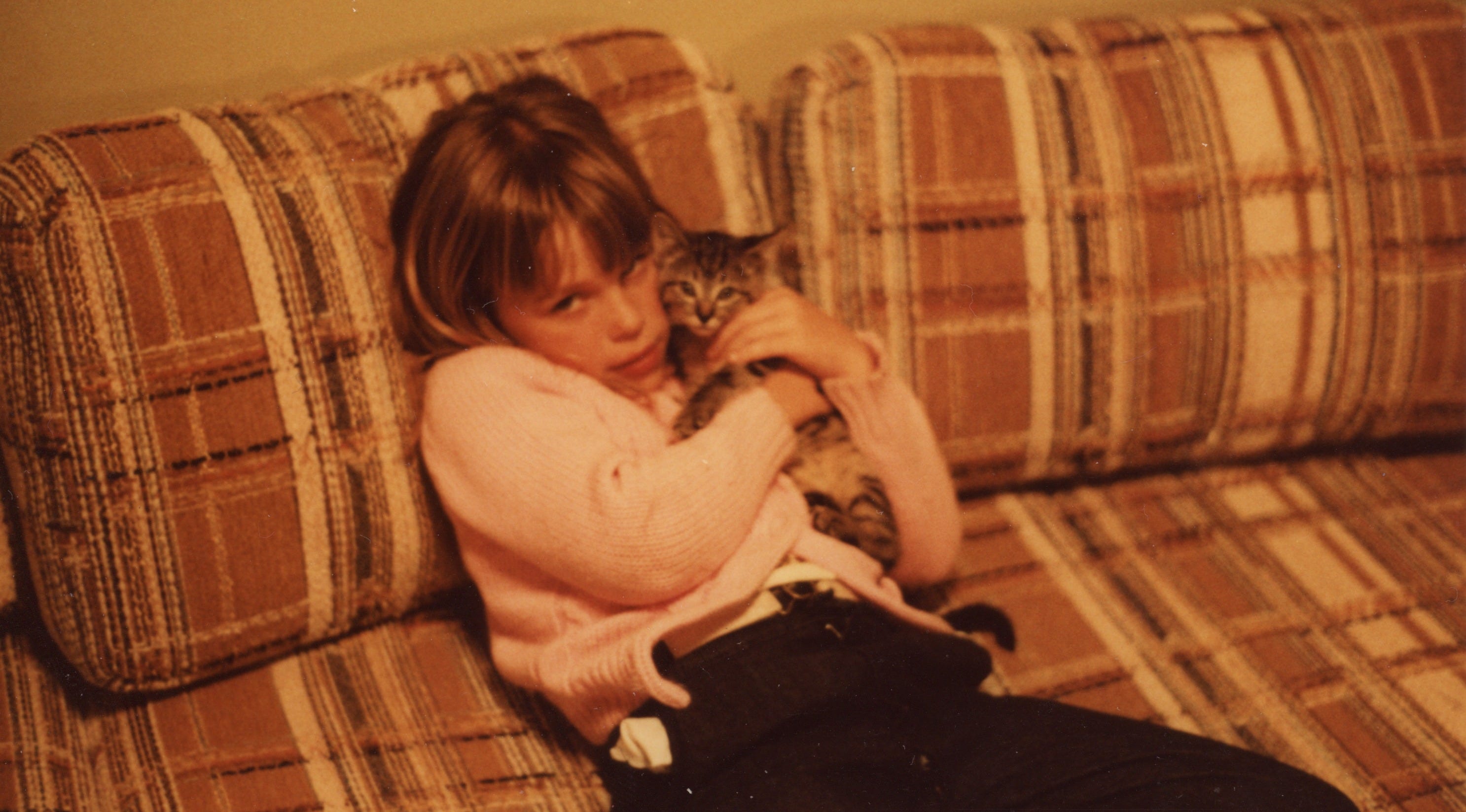
Dad imagined Gene was going to go back to his mafia ties and stir up trouble for him, maybe even threaten his life or get his judge brother get him trouble with the law. It is true Gene was mixed up in mafia messes in the sixties and seventies when he was a nightclub owner. One year his car got blown up by someone trying to get back at him. He disappeared himself in Florida for years until his brother hired a PI to track him down. He told me many stories I don’t think were just stories. But by the eighties, those days were long gone.
Gene was left with a beaten-down body from years of alcoholism and hard losses—a young wife lost to cancer and a bankrupt business after his partner’s betrayal. He had nothing else to lose. He wasn’t threatened by Dad. Mom had chosen him.
Performative Hate and Picking Sides
Mistrust fuels mistrust and grows hate. Then you start treating the other side as if they did something they never did and never would. Meanwhile, loyalty to your “side” means showing hate for the other, even when no one asks you too. The saddest part is we often learn this as kids.
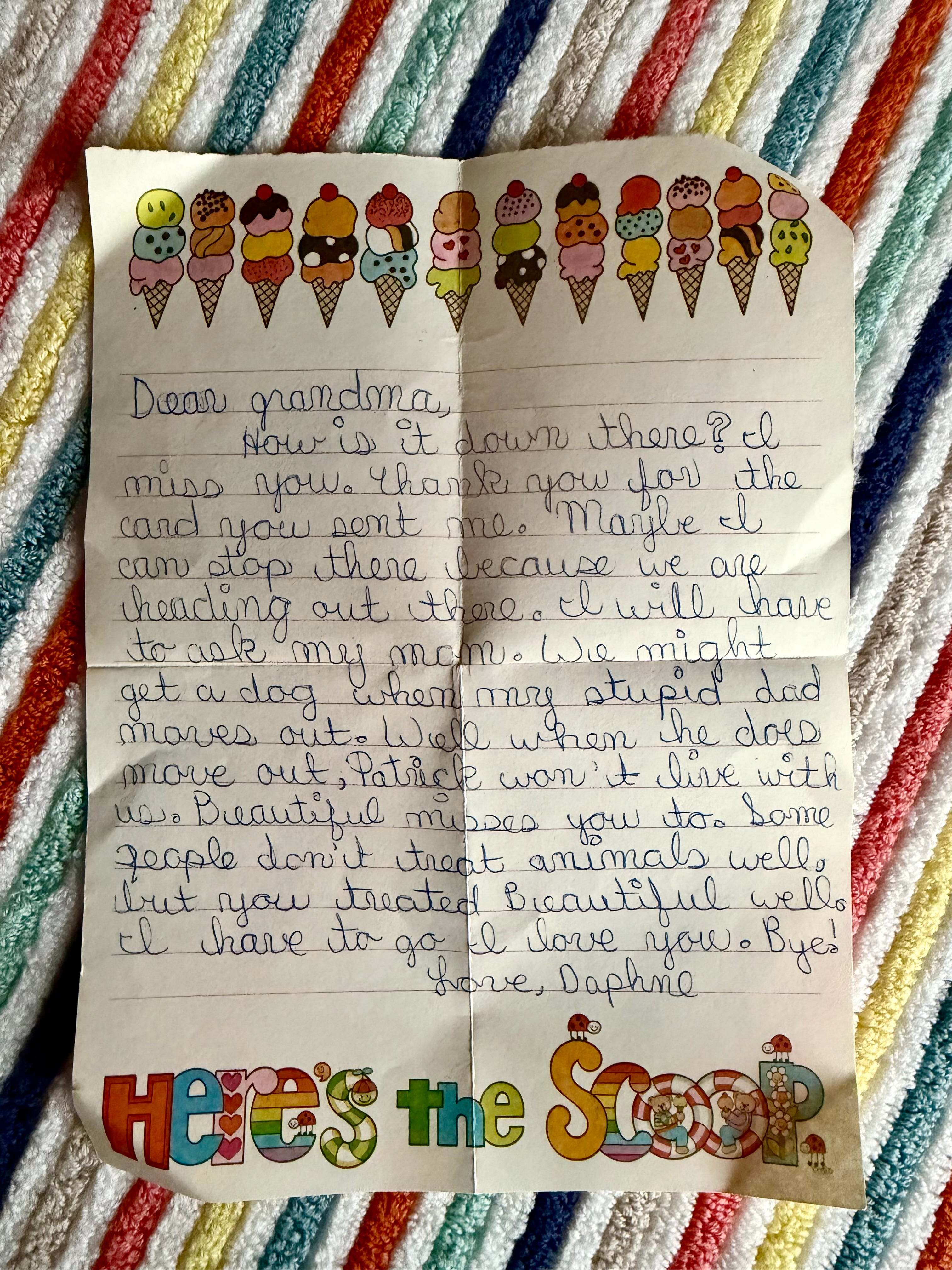
I recently found this letter I wrote to my grandma Odessa when I was 10. It was in a manila envelope filled with pictures and papers from her apartment after she passed away in 1994. The “my stupid dad” phrase stood out to me as performative hate. I hear my kid self proving my loyalty to Mom as I write to her mom, my grandma, wanting to make it very clear I was on Mom’s side.
My grandma Odessa would never of wanted me to call my dad stupid. Of course, her loyalty was to Mom, but she was way past seeing most people as simply good or bad. She’d been divorced multiple times. Her parents were divorced. There are always more than two sides and they’re usually not what you think. Nonetheless, I was immersed in an us-versus-them battle, stuck in a binary and reinforcing the stickiness of it.
Learning to Hold Them Both
Hate hurts everyone, especially the person holding it. And humiliation perpetuates hate. The hate-humiliation spiral is worthy of the overused “toxic” descriptor. Even worse, it’s the amplifying kind that’s also a trap.
Gene died in May of my senior year of high school after a long battle with alcoholism followed by several more years with a failing liver. The hate Dad held for him was no less destructive than addiction. Hate is contagious. And it’s deeply personal. I learned just how personal on the evening of my stepdad's funeral.
“So I heard he kicked the bucket,” my dad casually said to me over the phone.
“What do you mean?” I replied, confused, shocked, and wanting to have misheard.
He rambled on, arguing why my stepdad was a “waste of a life” — until I hysterically threw the phone down, swearing at him. Saying mean things just after someone dies is cruel. Death is traumatic even when you know it’s coming. And it always reminds how precious one life is.
Holding hate causes hatefulness and ends up harming you too. The hate Dad carried pushed people away he loved and couldn’t have been good for his soul. He only ended up living two more years than Gene. Holding all that anger for all those years also couldn’t have been good for his heart.
It wasn’t until my forties that I started to process the loss of Dad. Before I could do that with Gene I had to first honor his role in my life as a parent — not “just” a stepfather. He was daily in my life from age nine until nearly 18.
Both Dad and Gene live on in my heart and mind. They’re part of who I am. For a long time, I tried to tune out their loud, clashing voices. Over time, I’ve learned to hold both at once, listen to their insights, and choose my own way. Writing helped me get there. In the process, I realized how lucky I was to have had both of them in my life.
I used to tell my husband whenever our kids seemed like “handfuls” to go spend time around other kids. You’ll come back grateful. Same’s often true with moms and dads, though not always and that point is always important to remember.
The Gifts They Both Gave Me
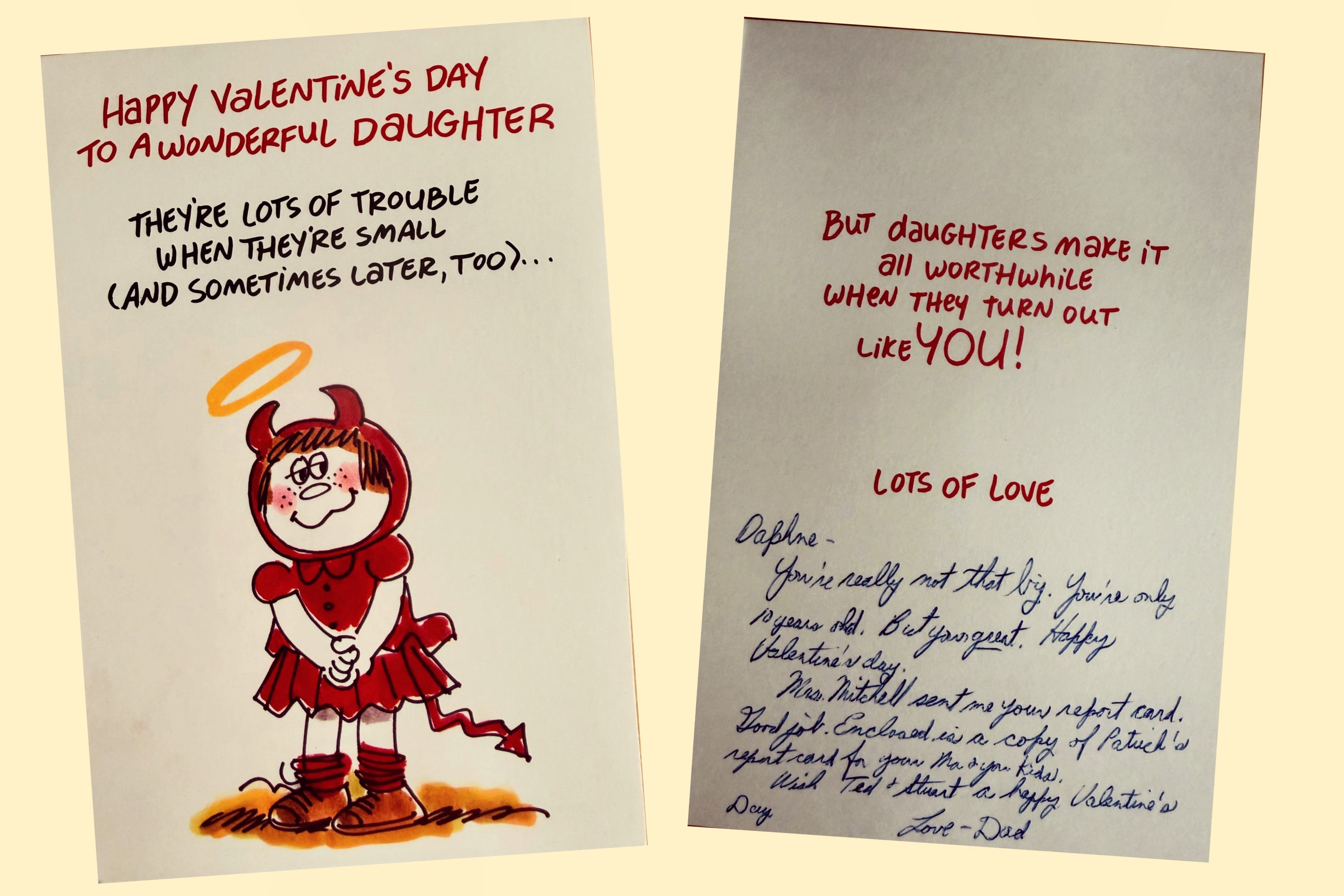
In that very same box I found the ‘Here’s the Scoop’ letter to my grandma, I found this Valentine’s Day card Dad mailed around the same time, just two months after he moved out. Feeling the love he showed in the letter (which wasn’t easy for him) made me even sadder about the performative hate I had just written about him in the letter to Grandma.
Dad had anger problems. Gene had alcohol problems. Both made life feel less safe and caused pain I still carry along with others. But both dads also gave me, and others, gifts we still carry, and I’m grateful for them.
Being a parent is harder than I expected, even with all the better information we have today. My dads did the best they could with what they had. Now it’s my job to heal the hurt and gather the pearls they gave me, not to clutch, but to pass on.
Both my dads made me feel like I could grow up and do anything. That was amazing. They cared more about what I thought and did than about superficial things like how I looked. They wanted to hear my ideas and opinions and they welcomed debate and even my spunk, mostly.
Outside of the home, I felt impossible pressures as a girl growing up with ridiculous standards—to be perfectly smart, athletic, and standardized “pretty.” You were supposed to strive to be a popular winner but had to do it without seeming to try while always being unnaturally nice. But at home, they loved me for me, even the me who messed up, acted out, and loved a challenge—and to challenge, especially them.
Capturing What Counts
Dad always had a camera around his neck. I kept mine in my purse in the film days.
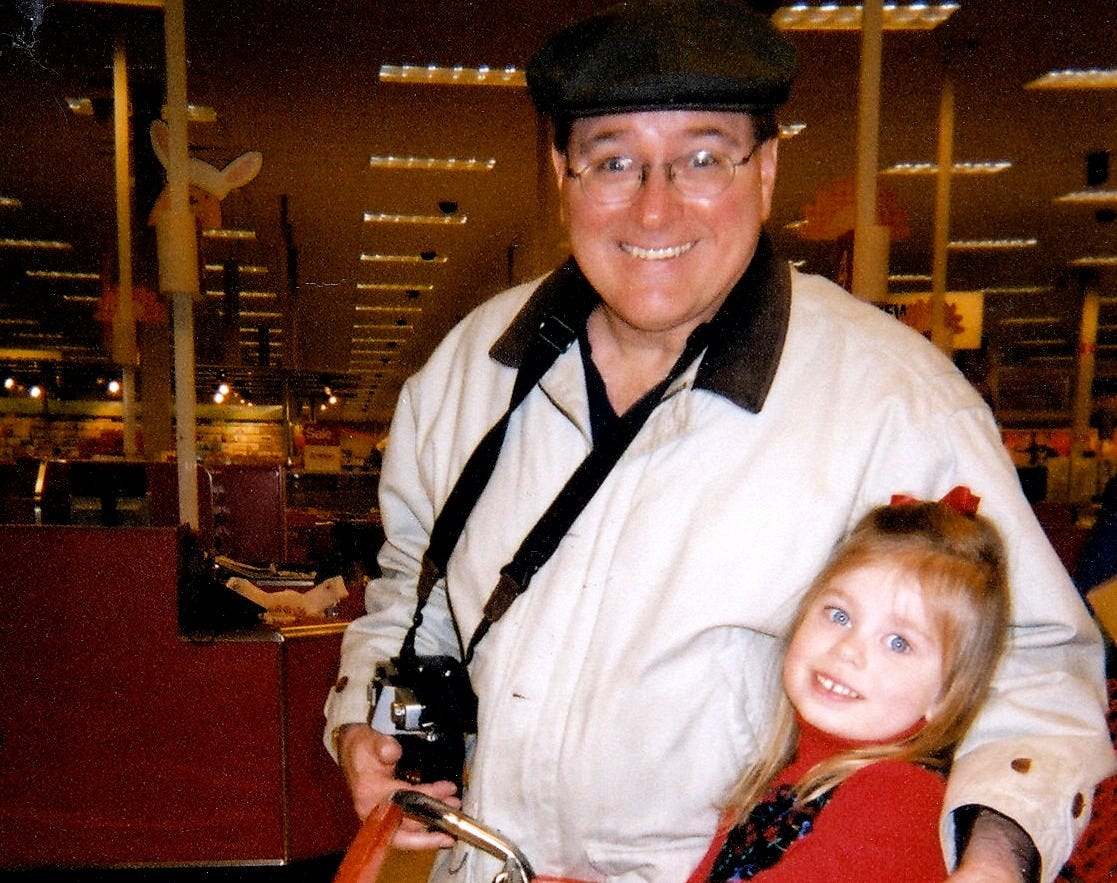
Gene was more of the photographed type but bought a camera after becoming an instant dad to three stepkids. He tried his best to do the dad things, capturing Kodak kid moments on holidays, school events, recitals, or games. It’s hard to know if his “bad” picture-taking was about not having Dad’s knack or the fact that he often showed up drunk and later had a lot of health problems (the liver does so much, so take care of it as best you can).
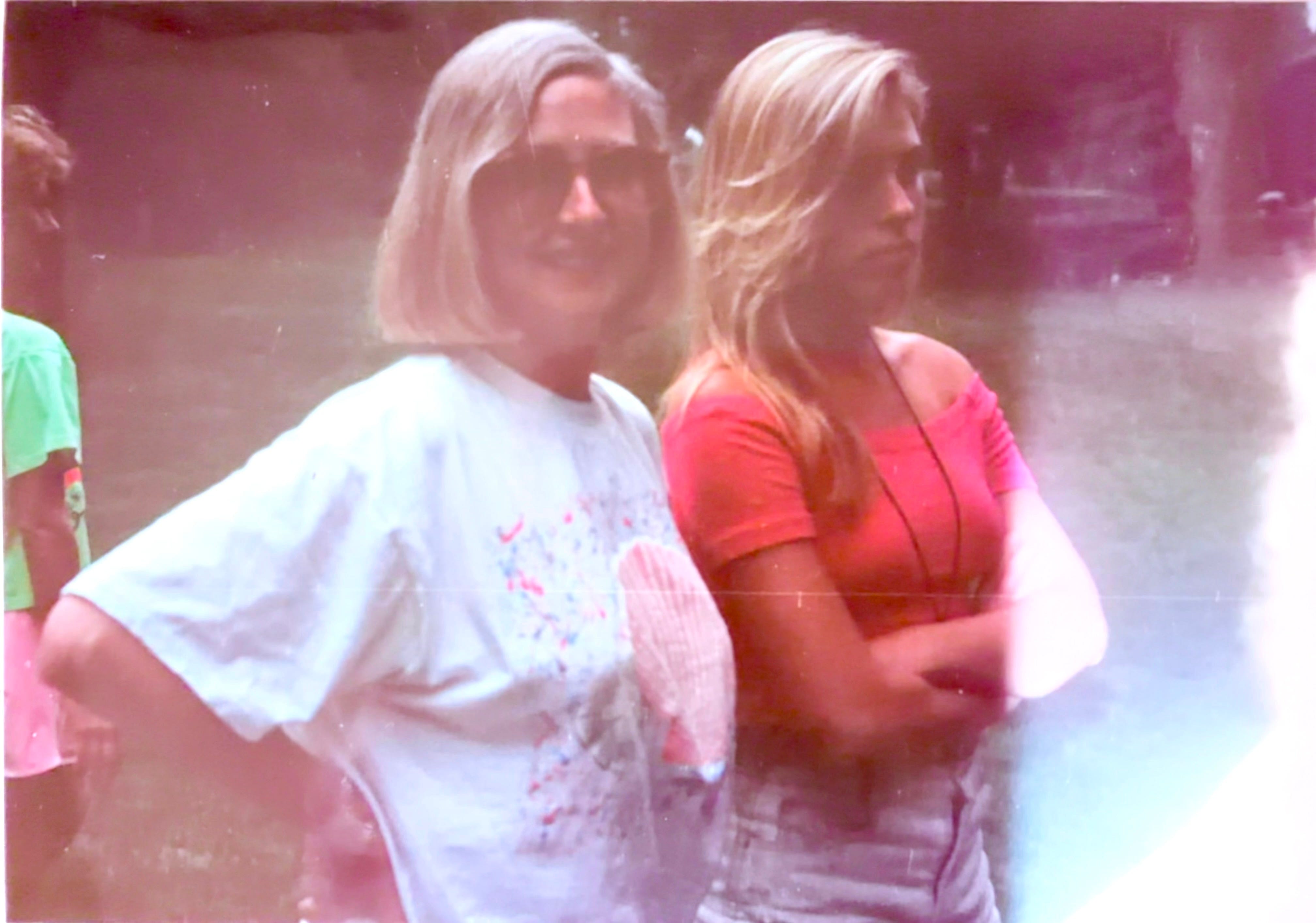
Just the fact that both dads cared to stop, look, and take them—whether the photos looked “perfect” or not—made me know they cared. There’s some special way a parent makes you feel noticed, that may annoy you, but also make you feel loved and maybe even more so years later, even after they’re gone. The times Dad and Gene made me feel loved are lasting feelings I’m holding.
I’ve made peace with the Dad and Gene within me. The thought of having both their influences has become comforting because I love them both and still miss them. And I feel even lucky that they were so different.
The world would be so boring if everyone were the same!
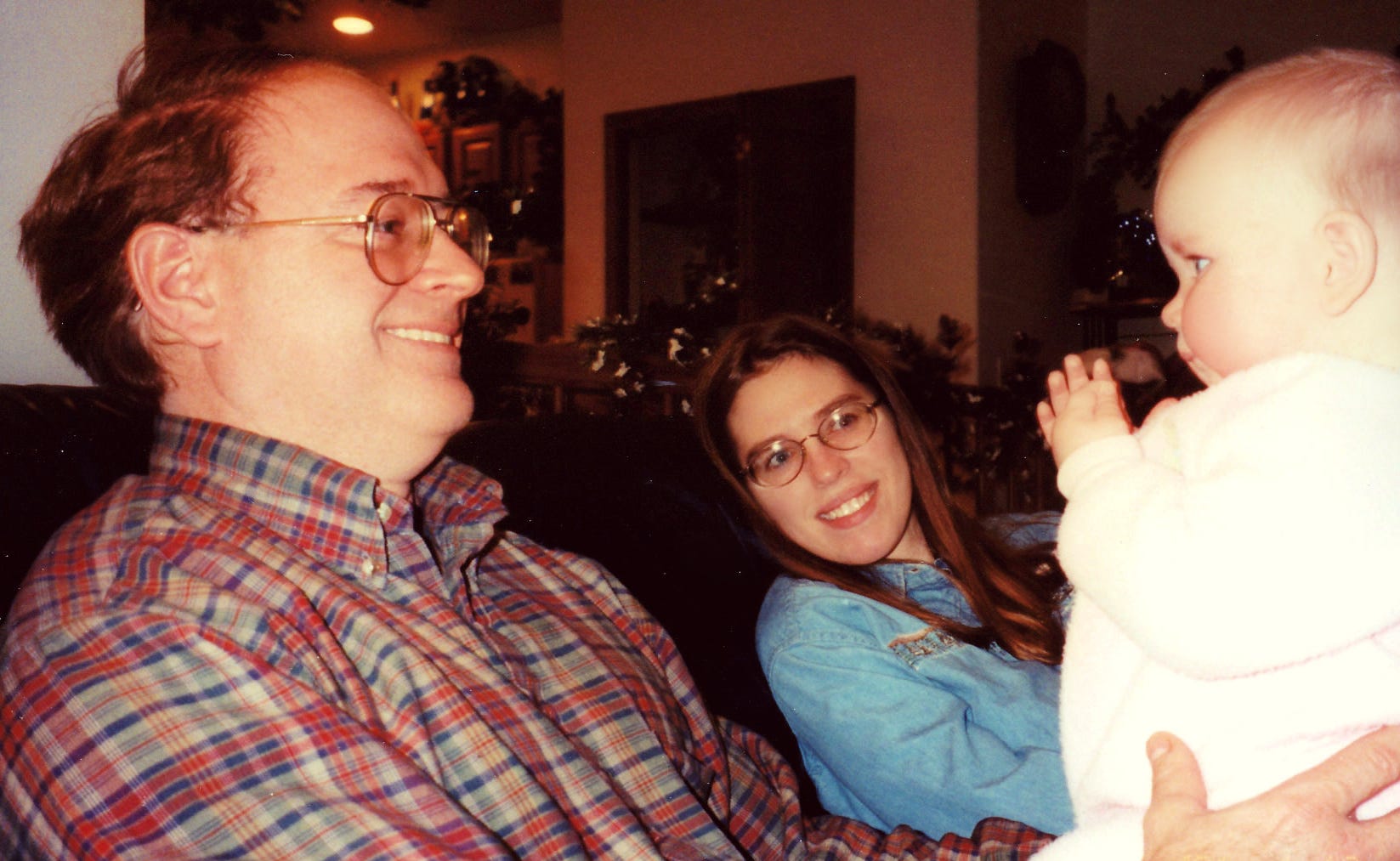
Now I’m Dad’s age in this photo taken Labor Day weekend 2000. And my first baby Nora’s wedding is coming soon. Dad and Gene would’ve loved knowing the woman Nora’s grown into and being there to share in her special day with Miranda. I can share their love and pass it down.
Lately, that act of passing things down feels literal.
Mom’s paring down to move into some place smaller. She asked me if I’d like to have Gene’s old camera, because like Dad, I’m the one always taking pictures in the family. Our old Pentax is long gone, along with any other film cameras we used to have. I’d already been planning on trying out film again, and getting to use Gene’s camera, while being the cameraman like Dad, will be even better. Making something new from the people who shaped and loved us is healing.
I got some film from a little camera shop (the same stores my dad took me to are still around, and they say business is booming!). I’m excited to try out Gene’s old camera this Father’s Day on my weekly walk with Brian in the woods (well, he runs and I walk). Later, we’ll celebrate the awesome dad he’s been since Y2K over dinner with the kids.
Happiest Father’s Day to all the dads, dads in spirit, and dads in heart ♥️


Anger was harder to empathize with than Gene’s alcoholism. But I’ve grown to have empathy for Dad too. His brain worked differently and I think he spent his life masking to fit in. Seeing his Irish twin sister Karen get killed by a hit-and-run truck when he was three had to have had left unprocessed pain stirring within too. Maybe today he could’ve gotten help early in life so he didn’t become another hurt adult hurting people, which often starts with the ones they love most. It’s not an excuse to not hold him accountable for his anger outbursts, but it is a reason for grace and a reminder how important mental health help is. I once interviewed a psychiatrist who said everyone deserves to understand how their brain works. I think that’s very true.
Dad always tried to get me to watch Cool Hand Luke, but I never really paid attention, even when I was in the room. With brothers and a bunch of their friends always around, my whole life was locker room talk. I didn’t want to watch a movie filled with it. I semi-watched it now while writing this, because I felt like I had to. The dark tone fit the Vietnam War era, but sixties movies are all kind of weird (I could make a cringe list but won’t).
Couldn’t help the Cool Hand Luke reference. Honestly, I never knew “What we’ve got here is a failure to communicate” came from the movie. Dad never imagined Mom would leave him, especially as he started making more money. If he had, I’m pretty sure he wouldn’t have taken her for granted. Failing to imagine seems just as consequential as failing to communicate and good communication relies on imagining how it might be perceived. Imagination helps you not only see something from a different point of view, but also as a different person. It’s imperfect and not enough to make assumptions on, but maybe enough to find enough common ground to build and maintain trust and connection.
People talk about how being stuck in the algorithm takes us away from reality, but it also deadens our imagination, which makes it harder to have relationships with actual people. We don’t all live, love, spend, or make value judgments the same way (even when the values are exactly the same!). Having people who help us see and appreciate those differences and similarities is a beautiful gift we can keep sharing and passing down.
They were so young when they died. Many of us thinking of our fathers today...
Thanks for the deeply thoughtful share!